
How Rope Quality Affects the Performance of a Ceiling Cloth Hanger
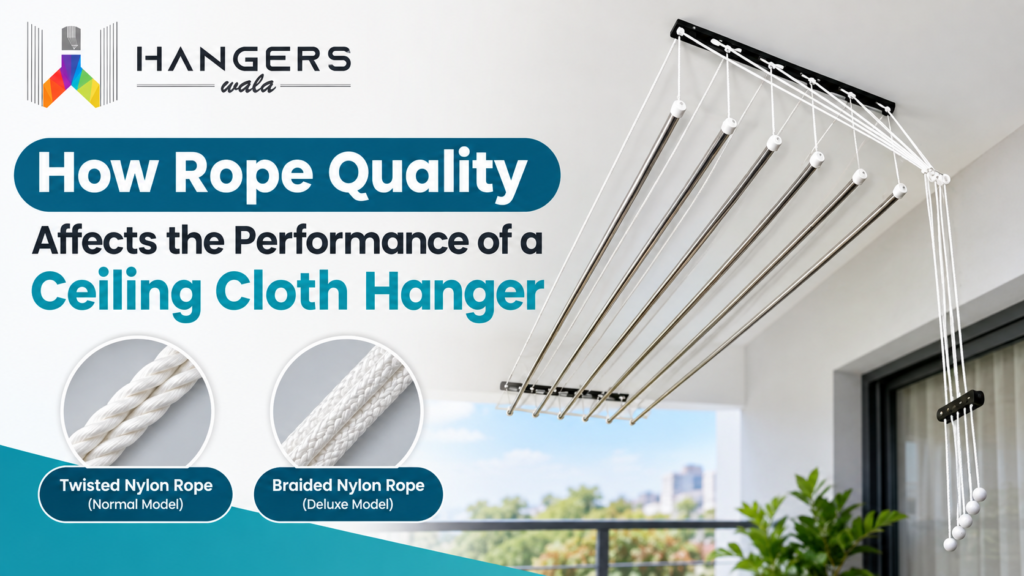
The rope is an important part of a Ceiling Cloth Hanger because it controls the movement of the drying rods. A good-quality rope helps the hanger move smoothly, supports regular use, and makes the lifting and lowering process easier. Why Rope Quality Matters A cloth hanger is used frequently, so the rope needs to handle repeated movement. Poor-quality rope can become weak, stretch, or wear out over time. The right rope provides better control and helps maintain smooth operation. Rope quality also affects the overall comfort of using the hanger. A strong and flexible rope makes it easier to pull the rods down when loading clothes and raise them back toward the ceiling after use. Two Rope Options for Two Models Hangers Wala offers two models, and each model uses a different type of rope based on its construction. Normal Model – Twisted Nylon Rope The Normal model uses a twisted nylon rope. It is designed for regular household use and provides a practical solution for everyday clothes drying. The twisted structure gives the rope flexibility and allows it to move through the pulley system during regular operation. Deluxe Model – Braided Nylon Rope The Deluxe model uses a braided nylon rope. Its braided construction provides a stronger and more durable rope option for frequent use. The rope works with the individual rod pulley system, allowing the rods to be raised and lowered smoothly. The Deluxe model also comes with a metal bracket and Jindal stainless steel rods. How the Rope Works With the Pulley System The rope connects the drying rods to the pulley mechanism. When the rope is pulled, the rods move downward for placing clothes. After the clothes are loaded, pulling the rope in the opposite direction raises the rods. Since the rope is used for every movement, its quality directly affects how smoothly the system operates. Choosing the Right Model Both models are designed for practical clothes drying. The Normal model with twisted nylon rope is suitable for regular household requirements, while the Deluxe model with braided nylon rope offers a more durable rope construction. Choosing between them depends on your usage requirements and the type of construction you prefer. Final Thoughts Rope quality plays an important role in the smooth functioning of a Ceiling Cloth Hanger. The Normal model uses twisted nylon rope, while the Deluxe model uses braided nylon rope. Understanding this difference helps you choose a hanger model that matches your daily clothes-drying needs. Hangers Wala provides ceiling-mounted cloth drying solutions designed for convenient and organized clothes drying in homes and apartments.
The Role of Rope and Pulley Mechanism in Ceiling Cloth Hangers
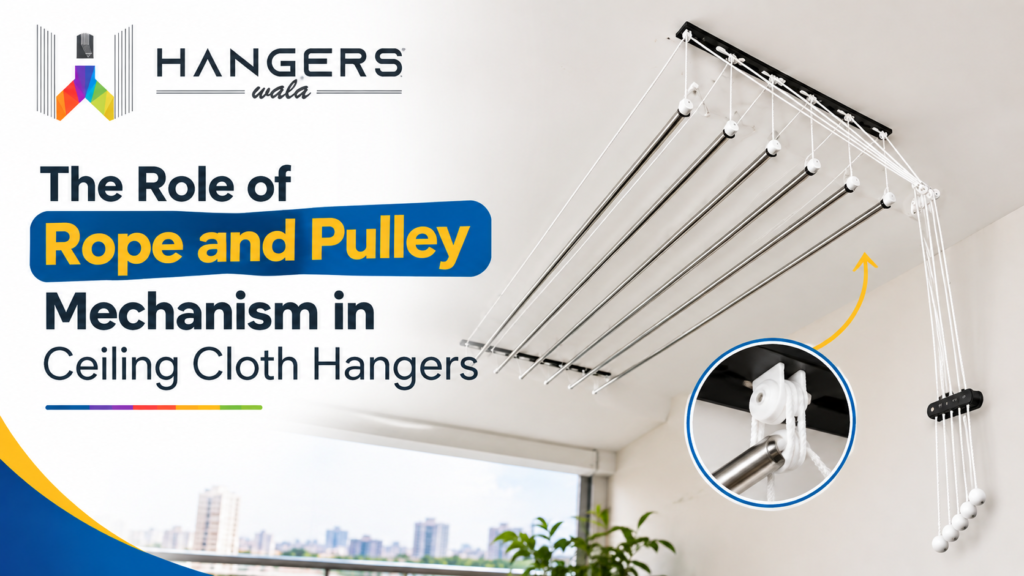
How the Rope and Pulley Mechanism Works A Ceiling Cloth Hanger uses a simple rope and pulley mechanism to make drying clothes easier. The pulley system allows the drying rods to move up and down, so clothes can be hung or removed without repeatedly reaching overhead. Role of the Pulley System The pulley helps control the movement of the rods. Each rod can be lowered to a comfortable height for hanging clothes and then raised towards the ceiling after use. This makes the available vertical space more practical. Importance of the Rope The rope controls the movement of the hanger rods. A good-quality rope helps provide smooth operation and reliable everyday use. The rope quality can vary depending on the type of hanger selected. Individual Rod Movement One useful feature of the system is the individual rod mechanism. Instead of lowering the complete set every time, you can operate the required rod according to your needs. This makes the hanger more convenient for regular household use. Ceiling Installation The hanger is designed to be installed on a suitable RCC ceiling. Proper installation keeps the pulley, rope, brackets, and rods securely positioned for regular operation. Hangers Wala Pulley Hanger Hangers Wala offers pulley-based cloth drying hangers with different quality options. The Deluxe model includes a braided rope and metal bracket, providing a strong setup for everyday use. Why This Mechanism Is Useful The rope and pulley system helps save floor space while keeping clothes at a convenient height for hanging and drying. It is suitable for balconies, utility areas, and homes where available space needs to be used efficiently. A well-designed Ceiling Cloth Hanger combines a simple mechanism with practical everyday use, making clothes drying more convenient without occupying additional floor space.
Ceiling Cloth Hanger Price in Hyderabad: Complete Buying Guide

If you are looking for a practical way to dry clothes in an apartment or balcony, a ceiling cloth hanger from Hangers Wala is a useful choice. Before buying one, it is important to understand what affects the price and which features are worth paying for. The Ceiling Cloth Hanger Price Hyderabad buyers pay can vary depending on the rod quality, rope, bracket, size, and overall build. At Hangers Wala, you can choose from different quality options based on your requirements. A basic model may have standard stainless steel rods and a regular rope, while a premium model can include stronger rods, braided rope, and a metal bracket for better durability. What Affects the Price? The main factors include the number and length of rods, stainless steel quality, rope type, bracket material, and installation requirements. Premium materials generally provide better durability and smoother daily operation. The quality of the pulley mechanism also matters. An individual rod pulley system allows each rod to be lowered and raised separately, making it easier to load and unload clothes. Normal vs Deluxe Quality For buyers comparing options from Hangers Wala, a normal-quality hanger can be suitable for regular household use. A deluxe model is a better option when durability and long-term performance are priorities. Deluxe models use Jindal stainless steel rods, braided rope, and a metal bracket, along with lifetime warranty coverage. Is It Worth the Price? A ceiling-mounted cloth hanger from Hangers Wala can save valuable balcony space while keeping clothes organized. It is especially useful for apartments where floor space is limited. The system can also be installed without blocking the regular use of the balcony. When comparing the Ceiling Cloth Hanger Price Hyderabad, do not look only at the initial cost. Check the material quality, warranty, installation service, and after-sales support before making your decision. Choose a hanger that matches your balcony size, drying requirements, and expected daily use. A good-quality system from Hangers Wala can provide a convenient and long-lasting clothes-drying solution for your home.
Ceiling Mounted Clothes Drying System for Indian Home

A ceiling-mounted clothes drying system is a practical choice for homes where floor space is limited. Instead of using a stand or rack on the floor, the drying rods are fixed to the ceiling, leaving the balcony or utility area free for regular use. The Ceiling Cloth Hanger from Hangers Wala uses a pulley-based design that allows the rods to move up and down. Clothes can be loaded at a comfortable height and then raised closer to the ceiling for drying. Designed for Everyday Clothes Drying The system can be used for regular clothes, towels, bedsheets, and other garments. Multiple rods provide separate hanging space, making it easier to spread clothes properly instead of placing everything on one rack. The individual pulley mechanism allows each rod to be operated conveniently. This also helps maintain space between clothes for better airflow during drying. Suitable for Indian Apartments Balconies in apartments often need to serve multiple purposes. A floor-standing rack can reduce usable space, especially when the balcony is narrow. A ceiling-mounted setup keeps the floor clear. The area can still be used for walking, cleaning, plants, or other household activities while clothes are drying above. Strong Materials Hangers Wala systems are made using components selected for regular household use. The setup can include Jindal stainless steel rods, braided rope, metal brackets, PVC channels, and supporting hardware depending on the selected model. Rod sizes are available from 5 feet to 8 feet, allowing homeowners to select a suitable configuration according to the available installation area. Normal and Deluxe Options Hangers Wala offers different quality options based on the customer’s requirements. The Normal range includes steel rods, twisted rope, and PVC channel. The Deluxe range includes Jindal stainless steel components, braided rope, metal brackets, and Jindal branding, along with a lifetime warranty. Installation by Hangers Wala Correct installation is important for a ceiling-mounted drying system because the support points need to be properly fixed to the ceiling. Hangers Wala provides installation support along with the product. For customers in Hyderabad, free delivery and free installation are available, making the complete setup more convenient. A properly installed ceiling drying system provides a dedicated place for clothes without taking away valuable floor space. It is a suitable solution for apartments, balconies, and utility areas where efficient use of space is important.
Is a Ceiling Cloth Hanger Worth It for Apartments?

If you are wondering is ceiling cloth hanger worth it, the answer is yes, especially for apartments where balcony and utility space is limited. A Cloth Drying Hanger gives you a dedicated place to dry clothes without taking up valuable floor space. Why Is a Ceiling Cloth Hanger Worth It? A ceiling-mounted Cloth Drying Hanger uses the unused space above your head. You can raise or lower the rods when needed, making it convenient for everyday clothes drying. It is a good choice for apartments because it: Saves floor and balcony space Keeps clothes organized while drying Allows better use of vertical space Reduces the need for bulky floor drying stands Works well for regular daily laundry Keeps the balcony more open and usable Best Cloth Drying Hanger for Apartments For apartments with a concrete or suitable solid ceiling, a Ceiling Mounted Cloth Hanger is one of the best options. Its pulley mechanism allows you to bring the rods down for loading clothes and raise them after hanging the laundry. For apartments with a false ceiling, a Wall Mounted Cloth Hanger is a better option. It can be installed on a suitable wall instead of fixing directly to the false ceiling. Ceiling Mounted or Wall Mounted Which Is Better? Choose a Ceiling Mounted Cloth Hanger when you have a strong concrete ceiling and want maximum space saving. Choose a Wall Mounted Cloth Hanger when you have a false ceiling or when ceiling installation is not suitable. Both options provide a practical solution for apartment laundry areas without occupying unnecessary floor space. Is It Worth Buying? Yes, a Cloth Drying Hanger can be a worthwhile investment if you want a permanent, space-saving, and convenient clothes-drying solution. Instead of moving a drying stand around the apartment every day, you get a fixed drying system that is easy to use. For apartment homes, Hangers Wala recommends a Ceiling Mounted Cloth Hanger for suitable solid ceilings and a Wall Mounted Cloth Hanger for homes with false ceilings. The right choice depends mainly on your ceiling structure and available installation space.
Balcony Cloth Hanger vs Clothes Drying Rack Which Is Better for Small Balconies
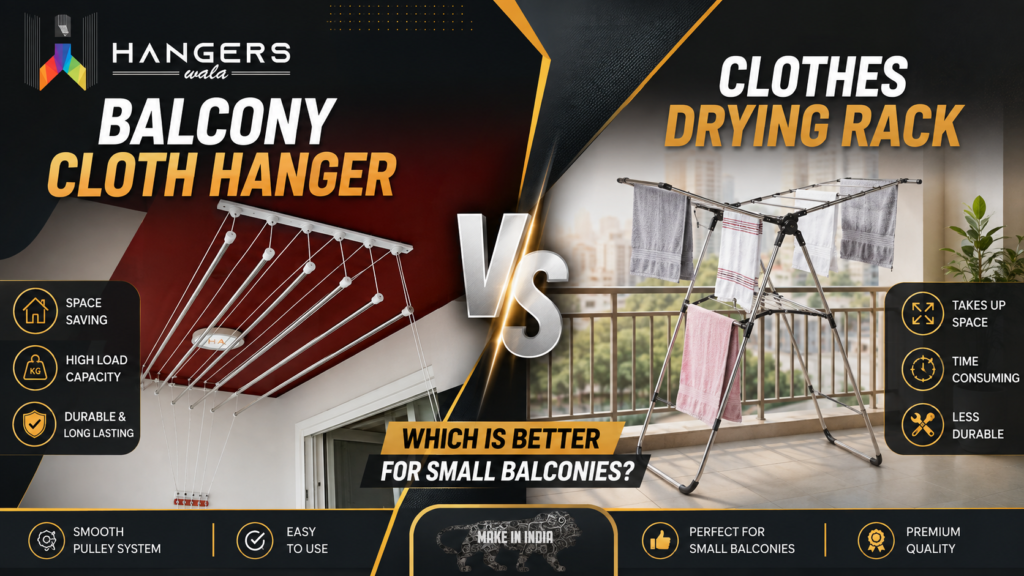
Small balconies need a drying solution that uses space carefully. A Balcony Cloth Hanger and a clothes drying rack can both be used for drying clothes, but they work differently. Balcony Cloth Hanger A Balcony Cloth Hanger is installed on the ceiling or wall and keeps the drying rods above the balcony floor. This makes it a practical option for small balconies where floor space is limited. Why Choose a Balcony Cloth Hanger Saves floor space Keeps the balcony open for walking Uses a pulley system to raise and lower the rods Suitable for daily clothes drying Available in different rod lengths Can be used in compact balconies and utility areas Hangers Wala offers Balcony Cloth Hanger options designed for compact spaces, with different sizes to suit the available balcony area. Clothes Drying Rack A clothes drying rack is placed on the balcony floor and can be moved when required. It is useful when you want a temporary or movable drying option. Why Choose a Clothes Drying Rack Easy to move No permanent installation Can be folded or stored depending on the rack type Suitable when enough floor space is available Useful for temporary drying needs However, a floor rack occupies balcony floor space while clothes are being dried. Balcony Cloth Hanger vs Clothes Drying Rack Feature Balcony Cloth Hanger Clothes Drying Rack Floor Space Saves floor space Uses floor space Installation Permanent installation Usually no installation Movement Rods move up and down Rack can be moved Small Balcony Better suited Can feel crowded Daily Use Convenient Simple Storage No storage required May need storage Balcony Space Keeps floor open Occupies floor area Which Is Better for a Small Balcony For a small balcony, a Balcony Cloth Hanger is generally the better choice if your main priority is saving floor space. A clothes drying rack is a better option if you want something movable and do not mind using some floor space. Final Answer If your balcony is small and you want to keep the floor clear, choose a Balcony Cloth Hanger. If you need a movable drying option and have enough floor space, choose a clothes drying rack. Hangers Wala provides Balcony Cloth Hanger solutions in different sizes to help make better use of compact balcony spaces.
10 Space Saving Clothes Drying Ideas for Small Balconies

If you are searching for practical clothes drying ideas for small balcony, a ceiling-mounted Cloth Drying Hanger can be one of the best space-saving solutions. Unlike floor stands and bulky drying racks, it uses the empty ceiling space and keeps your balcony floor free. 1. Use a Ceiling Mounted Cloth Drying Hanger A ceiling-mounted Cloth Drying Hanger is ideal for small balconies because it uses vertical space instead of occupying the floor. 2. Keep Your Balcony Floor Free One of the biggest benefits of a ceiling Cloth Drying Hanger is that clothes can be dried above the floor. This gives you more usable space in a compact balcony. 3. Choose a Pulley Operated System A pulley-based Cloth Drying Hanger can be lowered for hanging clothes and raised after loading. This makes daily drying easier without needing extra floor space. 4. Use Multiple Drying Rods A ceiling Cloth Drying Hanger with multiple rods allows you to hang different clothes separately. Better spacing can also help improve air circulation. 5. Select the Right Size for Your Balcony For the best clothes drying ideas for small balcony, choose a Cloth Drying Hanger based on your available ceiling space. The right size helps you use the balcony efficiently. 6. Make Use of Empty Ceiling Space The ceiling is often unused in small balconies. Installing a Cloth Drying Hanger turns this empty area into a useful drying space. 7. Keep the Balcony Neat and Organised Floor drying stands can make a small balcony look crowded. A ceiling-mounted Cloth Drying Hanger helps keep clothes organised without blocking movement. 8. Raise Clothes After Hanging With a pulley mechanism, the Cloth Drying Hanger can be moved upward after clothes are placed on the rods. This creates more open space below. 9. Dry Daily Laundry Without Extra Racks A properly sized ceiling Cloth Drying Hanger can provide dedicated drying space for regular laundry, reducing the need for additional stands or racks. 10. Choose a Smart Ceiling Drying Solution from Hangers Wala Among different clothes drying ideas for small balcony, a ceiling-mounted Cloth Drying Hanger is a practical option for saving space. Hangers Wala offers ceiling cloth drying solutions designed to make everyday laundry more convenient while keeping small balconies neat and functional.
How Does a Ceiling Cloth Drying Hanger Work? Complete Pulley Mechanism Explained
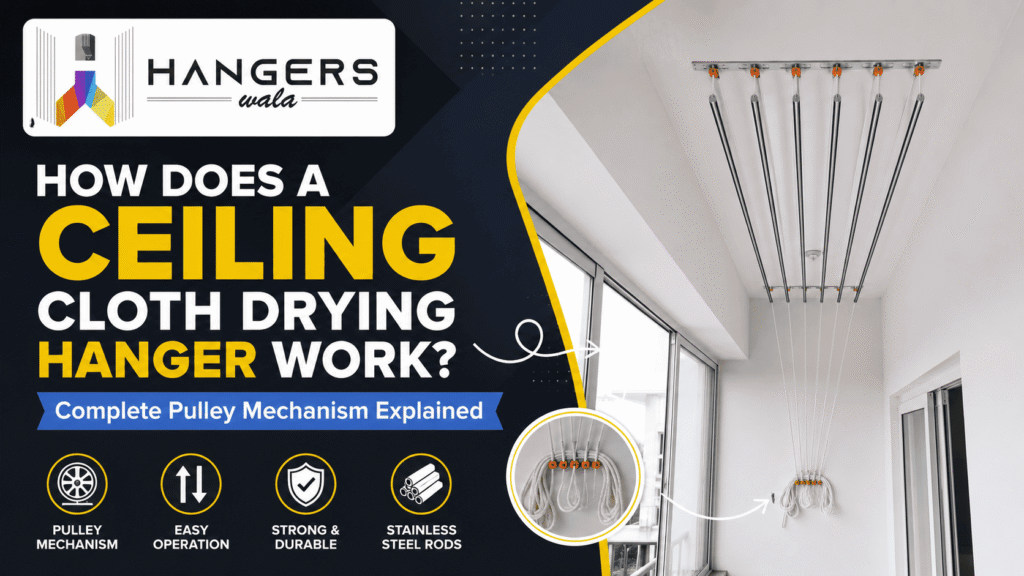
To understand how a ceiling cloth hanger works, you have to know about the pulley mechanism. A cloth drying hanger uses a pulley mechanism to allow the rods to go from the ceiling to a more convenient hanging position. The hanger is fixed to the ceiling, and the rods are vertically adjustable thanks to the pulleys and ropes. The primary goal of this mechanism is to ensure that the user can lower the rods to hang clothes, and then raise the rods to the ceiling after the clothes have been hung. How Does a Ceiling Cloth Drying Hanger Work? A ceiling cloth drying hanger uses a pulley system to connect each drying rod to a hanging mechanism. Each of the rods is supported by a ceiling mounted structure through a pulley system. To lower the rod, the user has to pull the rope down. The rod connected to the rope will also lower. To bring the rod back to its original position, the user has to pull the rope up in the opposite direction. This system is convenient for utility spaces, balconies, and other spaces where hanging clothes can be a pain due to the ceiling height. How Does the Pulley Mechanism Work? The main workings of a ceiling cloth drying hanger are the pulleys. Each rod is connected to a rope and is able to move vertically thanks to the pulley system. Here’s how it works. Join rod to rope. Rope goes through pulley. Pulley connects to support mounted on ceiling. Pull rope. Rise rod. Rod lowers to convenient height. Clothes can be placed on rod. Raise rod towards ceiling. So no need to worry if the rope breaks, it’s not the only thing holding up the rod; the pulley converts pulling motion to vertical motion of the drying rod. How does the rope lift and lower the rod? The rope is the only thing that moves the drying rod. Pulley and drying rod system works as the rope is pulled in a certain direction, rod either goes up or down. To control the strain applied on the rope which in return controls how much effort is needed to operate the system, pulleys should be installed which allows the rope to move easily. The quality of the rope matters as well. A normal system might use a regular rope while a Deluxe Quality system might use a better braided rope. How does individual rod pulley system work? Each rod is operated separately. Compared to a system which brings all rods to operate together, this system operates a separate rod in a separate pulley and a rope arrangement. As an example, to keep clothes on one rod only, operate only that one rod. It is useful to have a system wherein multiple types of clothing can be hung simultaneously. It is practical to have the ability to place each rod at a desired location. What Are the Main Components of the Mechanism? A ceiling cloth drying hanger has various parts and functions. 1. The Drying Rods Hangers Wala systems use Jindal stainless steel rods. These rods are designed to withstand regular use and are larger than the drying area. The lengths of the drying rods can be selected based on the available space and include 5 ft, 6 ft, 7 ft and 8 ft options. 2. The Pulley The pulley is one of the key components of the lifting mechanism and guides a rope to raise and lower the drying rods. 3. The Rope The rope connects the drying rods to the pulley. To move the rods, pull the rope. Depending on the selected quality, the system uses either a twisted rope or braided rope. 4. The Bracket The bracket is the supporting structure to the pulley and other components and requires a strong bracket to securely fit the mechanism to the ceiling. A metal bracket is used in deluxe quality systems and in other systems a fiber bracket or PVC components are used instead. 5. Ceiling Mounting Support The mechanism is fixed to the ceiling with the support designed to take the load of the hanger and the drying clothing. How Do You Use a Ceiling Cloth Drying Hanger? Using this system is simple. To start, position the Cloth Clips rods using the pulley and rope mechanism. Set the rods at a convenient position to hang clothes. Using the system of pulleys and ropes, lift the rods to hover the clothes at the most convenient position to dry and save space on the floor or balcony. Most users enjoy the convenience of not needing a step stool to hang clothes. Why Does the Rod Move Up and Down? There is a pulley and rope system that is vertically moving the rod. The pulley is fixed on the ceiling support. The system of rope pulling is connected to the rod. When there is movement on the rope, the rod follows and changes its vertical position. How Does the Mechanism Help With Drying Clothes? The lifting mechanism moves the Cloth Clips to a convenient position to place them at, and then lifts them to a higher position after hanging. When the rods are placed higher, the clothes can be moved to a position above the working or walking area. The open space between the rods allows air flow around the clothes. Enough space between the clothes is necessary for the air to circulate and dry the clothes completely. What Happens If the Rope Does Not Move Smoothly? If the rope becomes stiff, the first step is to check the rope and pulley area. There may be a problem with the smooth movement if the area is dusty, has dirt, or is not in the correct position. The rope also needs to be clean, and the pulley needs to be checked. Regular maintenance does not mean checking it every single day. Keeping it clean and checked from time to time will help the mechanism to function smoothly. If the rope or
Fiber Bracket or Metal Bracket? Choose the Right One Before You Buy
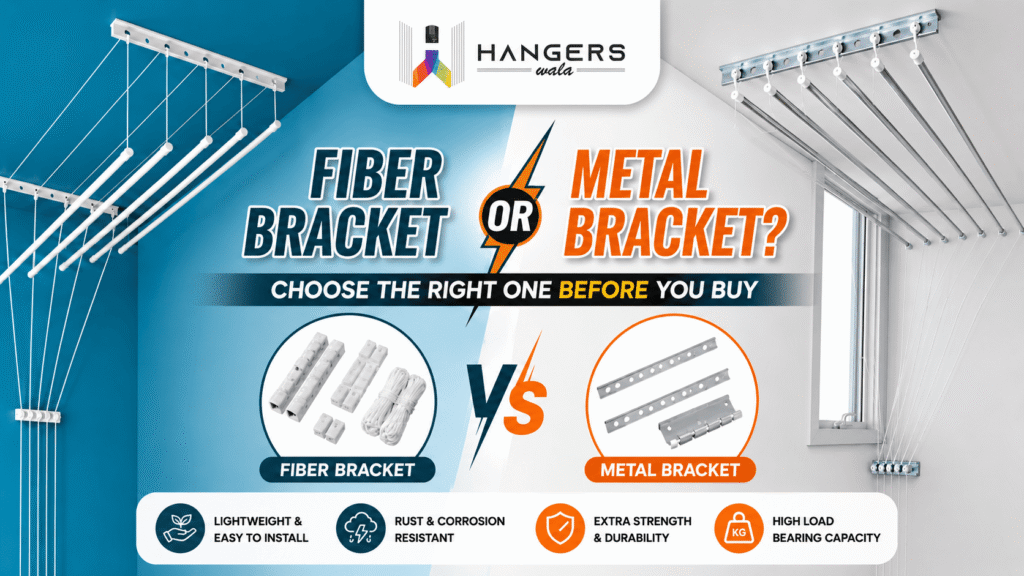
When buying a cloth drying hanger, most people focus on the rods, ropes, or lifting mechanism. However, one of the most important components that often gets overlooked is the bracket. The bracket is responsible for supporting the entire structure and ensuring the hanger remains stable for years. Choosing the wrong bracket can affect durability, safety, and long-term performance. The two most common options available today are Fiber Brackets and Metal Brackets. Both have their own advantages and limitations, making it important to understand the differences before making a purchase. At Hangers Wala, we believe customers should have complete knowledge before investing in a cloth drying solution. This guide explains the key differences between fiber and metal brackets, helping you select the right option for your home. What Is a Fiber Bracket? A fiber bracket is manufactured using high-quality reinforced engineering plastic or fiber material. These brackets are designed to be lightweight while offering sufficient strength for everyday household drying needs. Fiber brackets have become increasingly popular because they do not rust and require very little maintenance. They are suitable for indoor spaces where clothes are dried regularly but excessive weight is not placed on the hanger. What Is a Metal Bracket? Metal brackets are typically made from stainless steel, powder-coated steel, or heavy-duty aluminum. They are known for their excellent strength, stability, and long lifespan. Metal brackets are widely preferred in homes where the drying hanger is used frequently or where heavier clothing such as blankets, bedsheets, winter jackets, and quilts are dried on a regular basis. At Hangers Wala, premium-quality metal brackets are carefully selected to provide maximum durability and reliable performance for years. Fiber Bracket vs Metal Bracket Choosing between these two options becomes easier when you compare them based on different factors. 1. Strength The biggest difference lies in strength. Metal brackets are capable of handling much heavier loads without bending or deforming. If your family washes large quantities of clothes every day, metal brackets are generally the stronger option. Fiber brackets are durable for normal household clothing but are not designed for excessive weight over long periods. 2. Durability A durable Cloth Drying Hanger ensures reliable performance for years to come. Metal brackets, especially stainless steel models, can last for many years with minimal wear. They maintain their shape even after continuous use. Fiber brackets also have a good lifespan but may gradually lose strength if exposed to excessive pressure or harsh environmental conditions. 3. Rust Resistance One of the biggest strengths of fiber brackets is that they do not corrode or rust. Metal brackets made from high-quality stainless steel also offer excellent corrosion resistance. However, low-quality metal products available in the market may eventually develop rust if the protective coating gets damaged. At Hangers Wala, only premium corrosion-resistant materials are used to ensure long-lasting performance. 4. Weight Fiber brackets are significantly lighter than metal brackets. Their lightweight construction makes transportation and installation easier while still providing good support for everyday use. Metal brackets weigh more because of their solid construction. 5. Appearance Modern homeowners also consider aesthetics. Fiber brackets usually have a smooth finish and blend well with contemporary interiors. Metal brackets provide a premium, industrial, and elegant appearance that complements modern apartments and luxury homes. Ultimately, appearance depends on personal preference. 6. Maintenance Both bracket types require very little maintenance. Fiber brackets only need occasional cleaning using a soft cloth. Metal brackets made with stainless steel require minimal maintenance and maintain their shine for years. Both options perform well in this category. 7. Load Carrying Capacity If your drying hanger regularly supports heavy wet clothes, blankets, or comforters, load capacity becomes extremely important. Metal brackets are specifically built to withstand higher weight without affecting performance. Fiber brackets work perfectly for daily garments but should not be overloaded repeatedly. 8. Cost Fiber brackets are generally more affordable compared to premium stainless steel metal brackets. If you have a limited budget and your drying requirements are basic, fiber brackets offer excellent value. Metal brackets may cost slightly more initially but provide greater durability and longer service life, making them a worthwhile long-term investment. Which Bracket Is Better for Your Home? The answer depends on your usage. Choose a Fiber Bracket if: You have a small family. You mainly dry lightweight clothing. You want a budget-friendly solution. You prefer a lightweight design. Your cloth drying requirements are moderate. Choose a Metal Bracket if: You have a large family. You wash clothes daily. You dry blankets and heavy garments regularly. You want maximum durability. You prefer long-term reliability over initial cost. Why Hangers Wala Recommends Quality Over Price Many customers purchase low-cost cloth drying hangers without considering the quality of the bracket. While cheaper products may appear similar, they often compromise on material quality, resulting in reduced lifespan and poor performance. At Hangers Wala, every cloth drying hanger is designed with durability, safety, and customer satisfaction in mind. Whether you choose a fiber bracket or a metal bracket, our products are manufactured using premium materials that undergo strict quality checks before installation. Every cloth drying hanger is professionally installed by our experienced team to provide secure fitting and long-lasting reliability. Tips Before Buying a Cloth Drying Hanger Before making your purchase, keep these points in mind: Check the quality of the bracket material. Ask about the maximum weight capacity. Ensure corrosion-resistant materials are used. Choose a trusted brand with professional installation services. Choose the bracket type based on your family’s everyday clothes drying needs. Choosing superior quality is a smarter investment than simply selecting the cheapest option. These simple considerations can help you avoid frequent repairs and replacements in the future. Final Verdict Both fiber brackets and metal brackets have their own strengths, and the right choice depends on your household requirements. If affordability, lightweight construction, and rust resistance are your priorities, a Fiber Bracket is an excellent option for everyday use. If you want superior strength, higher load capacity, exceptional durability, and long-term performance, a Metal
How Ceiling Hanger Hyderabad Helps Families During Rainy Season
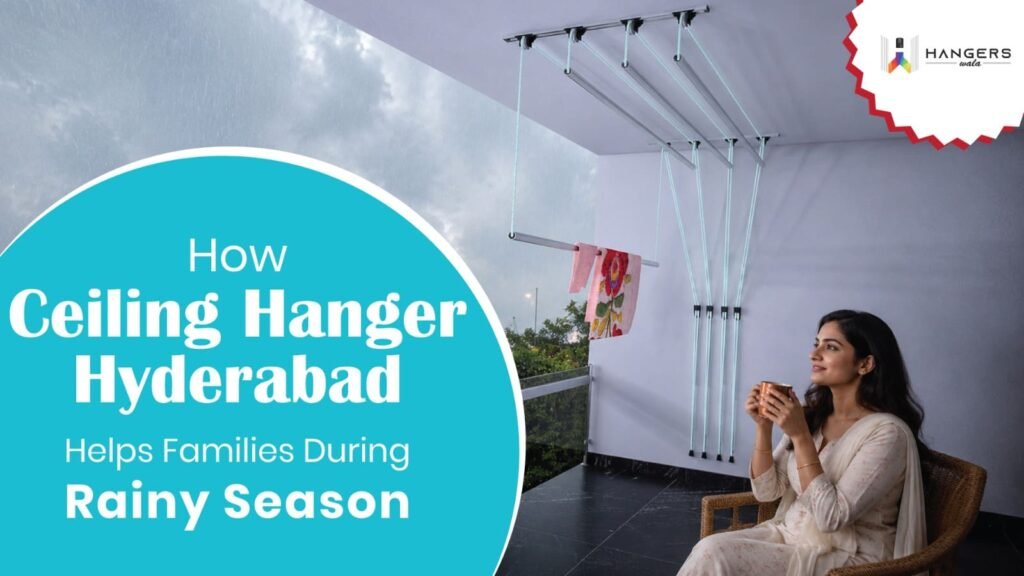
Introduction The rainy season brings welcome relief from the summer heat, but it also creates a common household challenge—drying clothes efficiently. In many homes across Hyderabad, continuous rainfall, high humidity, and limited drying space make laundry management difficult. Wet clothes often remain damp for extended periods, creating discomfort and affecting daily routines. Families living in apartments, independent houses, and gated communities frequently face the same concern during monsoon months. Traditional outdoor drying methods become unreliable because weather conditions can change unexpectedly. This is where a modern Ceiling Hanger Hyderabad solution becomes increasingly valuable. By utilizing unused overhead space, ceiling hangers provide a practical and organized way to dry clothes indoors while maintaining convenience and cleanliness throughout the rainy season. The Rainy Season Problem Every Family Faces During monsoon months, drying clothes becomes much more challenging than usual. Even after washing and spinning, garments often take longer to dry because moisture levels in the air remain high. Some common problems include: Unexpected rainfall soaking clothes left outside. Limited sunlight reaching balconies and open areas. Damp clothes developing an unpleasant smell. Indoor drying occupying valuable floor space. Laundry accumulating faster than it can dry. Difficulty managing large family laundry loads. These issues may seem minor individually, but together they can disrupt household routines. Families often find themselves washing fewer clothes at a time or repeatedly moving garments indoors and outdoors depending on weather conditions. Why Traditional Drying Methods Struggle During Monsoon Many households still depend on balcony railings, ropes, or portable drying stands. While these methods work during dry weather, they become less effective during the rainy season. Balcony Drying Challenges Balconies are usually the first choice for drying clothes. However, strong winds and sudden rain showers can quickly wet freshly washed garments. Covered balconies may provide some protection, but moisture in the air can still slow down the drying process. Portable Drying Stands Portable stands consume valuable walking space inside the home. During rainy days, they are often placed in living rooms, bedrooms, or hallways, creating clutter and inconvenience. Wall-Mounted Ropes Traditional ropes may sag under heavy loads and can make the drying area appear untidy. They also offer limited drying capacity for larger families. As urban living spaces become more compact, homeowners increasingly look for smarter alternatives that maximize available space. Observing a Growing Trend in Hyderabad Homes An interesting trend can be seen across many residential areas in Hyderabad. Families are gradually shifting from temporary drying arrangements to more permanent and organized solutions. Several factors are contributing to this change: Increasing apartment living. Compact balconies in modern buildings. Growing focus on space optimization. Desire for cleaner and more organized interiors. Need for year-round laundry convenience. Instead of adjusting household routines around the weather, homeowners now prefer systems that help them dry clothes consistently regardless of seasonal changes. This shift has increased interest in modern ceiling-mounted drying solutions. How Ceiling Hanger Hyderabad Provides a Modern Solution A Ceiling Hanger Hyderabad system is designed to make better use of vertical space inside a home. Installed near the ceiling, it allows clothes to be raised and lowered conveniently while keeping the floor area completely free. Unlike traditional drying methods, ceiling hangers offer a more structured approach to laundry management. Utilizing Unused Overhead Space Many homes have valuable overhead space that often remains underutilized. A ceiling hanger transforms this area into a practical drying zone without affecting furniture placement or daily movement. This makes it especially useful in apartments where every square foot matters. Protection from Unexpected Rain One of the biggest advantages during the monsoon is protection from sudden weather changes. Since clothes can be dried in covered spaces, families no longer need to rush home or constantly monitor the forecast. Laundry remains secure even when rain begins unexpectedly. Better Household Organization Instead of drying clothes across chairs, railings, and temporary stands, garments can be arranged neatly in one dedicated area. This simple improvement promotes a more structured and pleasant living space. Supporting Daily Family Routines The process of washing and drying clothes is a common part of daily living. When clothes take too long to dry, it can affect school schedules, office routines, and household planning. A ceiling hanger helps streamline this process. For Working Professionals Busy professionals often leave home early and return late. They may not have time to move clothes indoors when weather conditions change. A ceiling-mounted system reduces this concern by providing a reliable indoor drying option. For Families with Children Children typically require frequent clothing changes due to school activities, sports, and daily play. During rainy periods, managing multiple laundry loads becomes easier when sufficient drying space is available. For Senior Citizens Traditional drying methods may require bending, lifting, or reaching awkward positions. Ceiling hangers with user-friendly mechanisms can make clothes handling more convenient and comfortable. Improving Space Efficiency During Monsoon Space efficiency becomes especially important during rainy weather because families often shift drying activities indoors. Without a dedicated system, indoor drying can create several inconveniences: Reduced walking space. Crowded rooms. Temporary drying setups. Visual clutter. A ceiling hanger helps solve these issues by keeping clothes elevated above daily living areas. This allows homeowners to continue using rooms normally while laundry dries overhead. Suitable for Different Areas of the Home Another reason ceiling hangers are becoming popular is their flexibility in installation. Depending on household requirements, they can be placed in: Utility areas. Balconies. Wash areas. Service spaces. Covered terraces. Laundry rooms. This flexibility enables homeowners to choose locations that receive better airflow while maintaining convenience. A Practical Long-Term Investment Many monsoon-related laundry challenges return every year. Temporary solutions may work for a few days, but they often fail to address the root problem. A ceiling hanger offers a long-term approach by providing: Consistent drying space. Better organization. Efficient space utilization. Reduced dependency on outdoor weather conditions. Improved household convenience. Instead of rearranging furniture or searching for drying space whenever it rains, families can rely on a dedicated drying system throughout the year. Why Hyderabad